Showing posts with label Horror Cinema. Show all posts

Thursday, November 7, 2024

THE SUBSTANCE (2024)- Is Your Spine Sturdy Enough to Give Birth to a More Glamorous Version of You?

The Substance (UK- France, 2024). A Working Title Films/A Good Story/Blacksmith Films Co-Production. Written and directed by Coralie Fargeat. Cinematography by Benjamin Kracun. Production Design by Gladys Garot, Stanislas Reydellet. Costume Design by Emmanuelle Youchnovski. Music by Raffertie. Special Makeup Effects Artists: Pierre Olivier Persin, Olivier Alfonso, Frédéric Balmer, Marison De, Sandrine Denis, Brian Kinney. 

I initially thought about writing a Korean-language review for this film, which I obviously liked a lot despite some misgivings (discussed below), but I decided to start with an English-language one.  


The French director Coralie Fargeat scored big with her sophomore picture Revenge (2017), an outrageously harrowing tale of a rape survivor turning the tables on the perpetrators. It was almost tailor-made to court controversy, utterly unafraid of the potential accusations of exploiting female sexuality as well as of overt misandry from both self-appointed custodians of “correct” feminism and misogynistic male viewers. Talk about a “divisive” movie that can make strange bedfellows out of the sworn enemies! The Substance, the winner of the best screenplay award at the 77th Cannes Film Festival, has received a similar type of response, allegedly triggering walkouts during the screenings.   

Make no mistake, this is a full-blown body horror film: geysers of blood are showered on dozens of its cast in one hilariously overdone scene and it is not shy to display horrifying prosthetic SFX makeup on its principals, the kind of what-have-I-just-seen body transformations so extreme that in most other movies, such as Troma’s Toxic Avenger series or a Frank Henenlotter film, they would only work as sick jokes. The great thing about Fargeat’s opus is that all these excesses are presented with neither a shock-jock (at heart masculinist) comic glee nor an intellectualized, winking irony. 

Despite infusing dollops of truly funny dark humor into the film— the best bit being the hideously deformed Elisabeth (Demi Moore) shouting down her lecherous neighbor (Gore Abrams)— she is quite sincere about the organic, corporeal ways in which she unfurls the film’s horrific premise. Fargeat does not shy away from slathering the big screen with gigantic close-ups of not only Margaret Qualley’s porcelain-skinned derrières but also a hypodermic needle stabbing an arm and a purple-grey wound leaking puss.


It is also one of those horror films from female helmers— there are quite a few of them receiving global attention at this point, including Jennifer Kent (Babadook), Natalie Erika James (The Relic, Apartment 7A), Arkasha Stevenson (The First Omen), Michelle Garza Cerbera (Huesera: The Bone Woman) and Rose Glass (Saint Maud, Love Lies Bleeding)— unafraid to skirt the boundaries of tasteless exploitation and yet never losing sight of the female subjectivity. The film is ruthlessly efficient in purging it of superfluous exposition or contextual description. For instance, we never find out the “motivation” or corporate pitch behind the Substance that allows Elisabeth Sparkle to transform into her “idealized” self, Sue: we are not even sure if there is a corporation behind it, or whether this is some kind of an alien social experiment. What we get instead is a sequence that explains how the transformation process works in BIG block letters that a four-year-old could comprehend. 

The “LA” Elisabeth’s inhabits is manifestly not a real location but a spot in an ultra-stylized, I am almost tempted to say, fairy tale universe (Fargeat apparently filmed all exteriors in France). You cannot also find many other recent movies in which male chauvinistic behavior is so openly and grotesquely displayed, summarized in a shot in which the unsubtly-named TV executive Harvey (Dennis Quaid) lights a cigarette and his puckered lips are filmed to exactly look like, well, another human organ at the opposite end of the body (in equal measure cringe-inducing and funny as hell). 


And yet, as Alexandra Heller-Nicholas points out in one of the more thoughtful defenses of the film, The Substance is so viscerally honest about the aging female body that it almost becomes a documentary in this regard. At heart of the film’s power lies the two bold performances by Moore and Qualley. Moore’s sheer level of commitment to her role is frankly jaw-dropping and itself provides, meta-textually speaking, a powerful critique of the view that the film objectifies woman’s body. At 61 at the time of filming, Moore is still extremely beautiful, but she is unafraid not only to expose her vulnerably naked body to the clinical scrutiny of the camera but also to envelope herself in a series of increasingly hideous prosthetic makeup that leave little to imagination in terms of a “deteriorating and mutating female body.” Is it just me or she appears almost liberated playing these progressively grotesque versions of herself, all with their physical hindrances (hunchbacked, huge knots of swellings on her fingers, etc.)?  Qualley’s surreally gorgeous body, again in full display in its nakedness, was apparently prosthetically enhanced but she is also good in projecting joyful callousness that suggests a mind gripped by substance addiction.

Ma Rong, my graduate student, pointed out that the Elisabeth-Sue relationship, in its graphic and sometimes unexpectedly touching details, reminds her of one between an ailing, deteriorating mother and the daughter who must care for the former (this is actually the pretext Sue uses to have regular seven-day reprieves from her new job as the hot star of a TV fitness show). The contests of wills, recriminations, deceptions and eventually (literally) mutually destructive behaviors between Elisabeth and Sue are squarely based on the fact that they share the same identity. In a mother-daughter relationship, the same gender between them could create a sense of identification in which the kind of qualities the mother rejects or hates in herself could also be projected onto the daughter. We see a similar dynamic played out between Elisabeth and Sue. As I was watching the film, I kept wondering why they both treat the other self with such lack of compassion or acceptance: after all they are the same person. And yet, this is probably more “realistic” among the human relationships than I would care to admit.  (I also agree with Ma's view that The Substance is more "hyperrealistic" than documentary-realistic if we were to most appropriately characterize Fargeat's approach)


For me, the film’s power was somewhat marred by its completely over-the-top climax, although I do not believe it deviates from its thematic focus and just becomes a “horror movie” even at this juncture. Since it is made in a punch-you-in-the-face sensory-assault style and with a laser-sharp focus on bodily manifestations, the parade of mutated organs and mismatched body parts in the last quarter feels in sync with the rest of the picture. And as I have mentioned, none of this is presented in a wink-wink, we-are-going-to-gross-you-out “self-aware” manner. Even the very ending of the movie, outrageous as it is, tied to the imaginative Sam Raimi-like opening sequence involving Elisabeth’s Hollywood Star of Fame, is resolutely focused on the latter’s subjectivity, so it never feels gratuitous or condescending. 

Still, the aforementioned geysers of blood go on for a tad too long, the mutated body makeup has one too many gross details like a flesh-embedded, half-formed denture or a jutting hand: it is a bit overwhelming. Something grotesque, yes, but also less messy and more aesthetically consistent with the theme of the dual-split personality of the protagonist might have worked better. 


To reiterate, The Substance is a great body horror film, but I would not hesitate to call it feminist, although certainly not in a usual way that gets a stamp of approval from the border police of the definition. It might be acutely uncomfortable to watch for both male and female viewers, but, like her previous work Revenge, it never goes the easier way of tidying up the narrative in a genre-mandated conventional way or teaching a moral “lesson” to its female protagonist. It is not exactly an uplifting drama of female empowerment, but in its almost ridiculously graphic depictions of the anxieties and societal expectations that all women face regarding their aging bodies, it is brutally honest and finally quite affecting, perhaps even touching. 

A note: Alexandra Heller-Nicholas in the essay quoted above cites two Asian horror films, Helter Skelter from Japan and The Yoga Academy from South Korea, both interesting and illuminating examples, but one Asian horror film that in my view most closely covers the same thematic grounds and subject matter is the animated film Beauty Water. I have reviewed it in a previous entry to this blog space, so interested parties might want to check it out if you are not familiar with the movie.

Wednesday, February 16, 2022

My Favorite Twenty Blu Rays/4K UHD Blu Rays of 2021


I am back with My Favorite Blu Ray (and 4K UHD Blu Ray) List of 2021.  Those who have checked back with this blog might have noticed that I was unable to upload the annual 2020 list, even though I was still able to upload the Korean language version.  It was all I could do to simply post a list of titles, sans screenshots, at various social media outlets.  The reason for this absence, the global plague that has demolished and damaged so many lives in the last year, should be obvious to anyone currently living on Planet Earth, so I will not belabor the point. 

However, I do want to mention that in 2021 I underwent a major physical transformation, not just by means of quasi-cybernetic surgeries augmenting parts of my body (that had taken place, too, but in previous years), but consciously engineered by me to improve my “health,” which, I have learned to my horror, fascination and ultimately enlightenment, is really a discursive construct.  No details about my diet (the dreaded and vilified K-diet… no, not Korean food diet, but the one that rhymes with “veto,” in the first three months of summer, and subsequently oscillating on the low-carb spectrum from the modified Atkins to the Mediterranean-with-red-meat-and-less-wine up to the present point, mid-February, 2022) as there are few things more boring than listening to middle-aged/old people lecturing, hectoring and/or whining about their body issues.  

Suffice to state that I now have some inkling of what Shin’ichi, the hero of Iwaaki Hitoshi’s Japanese manga masterpiece Parasyte (Kiseiju) must have felt like, especially after Migii, his “parasite,” partially merged with him on cellular level in order to save his life (read the manga if you are curious).   Who is that guy looking back at me from the other side of the mirror?  He looks like a Pod Person replica of me, but there was apparently a glitch in the copying process, and the aliens ended up with an incompletely aged version of myself who has the bodily shape of myself twenty years ago, just appropriately aging hair and wrinkles.  Or a parallel universe version of myself, somehow aged to the identical juncture in personal histories but with a radically different intervening experience starting off some point twenty years ago— sort of like Christian Vale playing the protagonist in Machinist and playing Bruce Wayne meeting in the same movie. It was simultaneously thrilling, funny and a little scary to meet up with one of my lovely former RAs at LA last November, and seeing her hesitant response, not entirely sure that I am actually Professor Kyu Hyun Kim she had known for many years.

Anyway, enough digressions.  Despite the ravages of the COVID-19, appreciation of old (not necessarily “classic”) motion pictures on my part has not been adversely affected at all, to say the very least.  2021 still saw a veritable glut of special editions, restored classics and not-so-classics, jaw-dropping boxsets containing 80-page, 90-page “booklets,” 4K UHD discs that literally brought theater-going experiences to my living room, and more.  Even though partly due to the above-mentioned physical transformation that did require an unprecedented level of commitment and prioritization on my part during the summer season, the overall number of Blu Ray and 4K UHD titles collected this year declined perhaps by 9-10 per-cent compared to 2021, but this is in my view a negligible change, and it was just as difficult in this year to distill the list to mere 20 titles for 2021 as it had been for any other year.  

Physical media marches on, and as I have already stated in my Best of 2019 post, the shrinkage of pie for Blu Rays in the overall audio-visual product market has been a given for the last twenty-five years and it literally does not matter in the big scheme of things. BTW, I actually own more than one hundred Korean (and non-Korean) movies as video files in my hard drives.  So I am not a physical media “purist” by a long shot.   It is just that if the choice is between downloading a movie for $19.99 for “ownership” at Vudu (don’t misunderstand, this is still my go-to website for renting a film for home theater) or Amazon, giving these companies the total right to “delete” these films anytime they want (you American believers of free market out there, you wouldn’t call this kind of deal perpetuated by Disney, Amazon, whatever, a real form of “ownership,” would you?  I didn’t think so), and owning an optic disc for the same price, I will always go for the latter.

As is the case with every year, I would like to reiterate that this list is not a compendium of the greatest or even historically most meaningful Blu Ray releases in 2021, nor is it an assessment of best restorations or the most high-quality presentations of particular motion pictures: it is a highly personal, eclectic and eccentric assessment of the discs that I had purchased last year, with the operating keywords being “(re) discovery” and “emotional responses.”  And as with the list in any other year, the selections here do not exactly replicate the Korean-language version uploaded here. I thought that as I age, the compartmentalization in my brain between Korean-language and English-language-speaking selves would gradually deteriorate.  Well, this did happen in some areas of my life, but in other areas, the division still holds.  And no, I do not feel “nostalgic” about South Korea in which I had grown up (although I love teaching about it to my students).  I was blessed with a very happy childhood with many material and educational privileges, but I vastly, totally, absolutely prefer today’s South Korean society, politics and cultures over those of the “old” version, even South Korea of twenty years ago, when the country was entering its embryonic phase as a global pop culture powerhouse of today.  
  
Onward now to the list!   Again, a note to those not familiar with Blu Rays: Region “A” discs are playable without modification in North America, Japan and South Korea, whereas Region “B” discs are playable only in Europe. 4K UHD Blu Rays, on the other hand, have no regional codes so you need not worry about purchasing discs released in the regions different from your own.   However, I do not recommend getting into collecting 4K UHD discs unless your home is equipped with a TV with at least 56-inch or larger-sized screen and other appropriate accoutrements for a high-end home theater.  You won’t feel much difference in the viewing experience otherwise.  

20.  Night Gallery Season One (1969-1971, Blu Ray- Region A, Kino Lorber-Universal) 


Often accorded little respect among the cognoscenti of the American genre TV as the inferior sibling of Rod Serling’s Twilight Zone, it was still one of those shows, like Circle of Fear and The Invaders, left indelible impression on me when it played with inexhaustible frequency at the AFKN TV network, mostly in black and white (color TV broadcasts in South Korea did not commence until the tail end of ‘70s).   This Blu Ray edition, which collects the pilot film composed of three segments, one of them starring Joan Crawford directed by Steven Spielberg (Did this wunderkind somehow convince Crawford that her character is supposed to be a sympathetic victim?), as well as 14 episodes of varying lengths and effectiveness from Season 1.    

 This Kino Lorber Blu Ray collection distinguishes itself by gathering together an impressive group of genre aficionados, scholars and TV historians as audio commentators, including Tim Lucas, Kim Newman, Constantine Nasr and Gary Gerani. They provide the appropriate context for appreciating innovations as well as limitations of this troubled series.   I particularly appreciated, as a historian, Craig Beam’s video essay on the ways in which the series was butchered by the powers-that-be for syndicated reruns, intermixed with dollops of completely inappropriate stock footage culled from a variety of sources.    

 
19.  The Dead Zone (1983, Blu Ray- Region A, Scream Factory)   


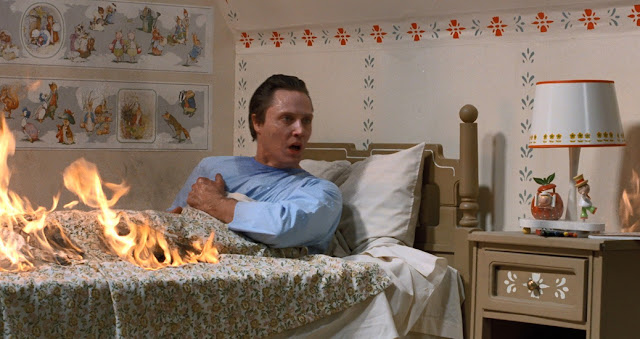
David Cronenberg, as of 2021 reported as embarking on a brand new horror film, has been served well by the physical media, with such specialty labels as Criterion, Arrow and 101 Films competitively releasing the master’s oeuvre in ever-expanding and elaborate special editions.   Now it is Shout! Factory’s turn, as they drop us a very welcome Blu Ray edition of The Dead Zone, perhaps Cronenberg’s most mainstream work, with a new 4K scan of the original negative and a series of substantial supplements. 

Watching this film again for the umpteenth time via this sparkling new Blu Ray edition, I am struck by just how powerful and sensitive Chris Walken’s portrayal of Johnny Smith is, and how affecting and authentic his bittersweet relationship with the Brooke Adams character comes across as.  I speculate, along with The Fly, this “tragic romance” angle, enlivened by the film’s unconventional but brilliant casting (Stephen King allegedly wanted Bill Murray in the role of the clairvoyant!), is what endows The Dead Zone with its strong beyond-horror-fandom and non-gender-specific appeal.    

 
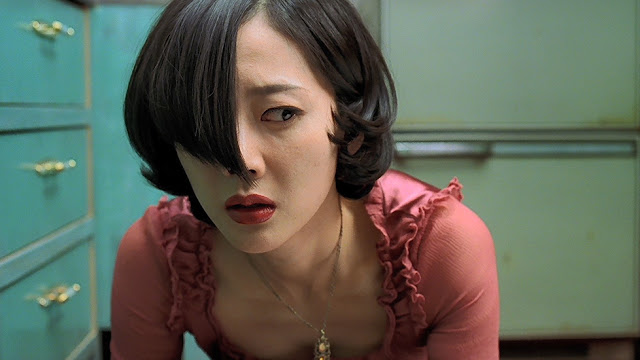
18. A Tale of Two Sisters (2003, Blu Ray- Region B, Arrow Video)   


One of the most controversial, most beautiful and most affecting horror films ever made in South Korea have been subject to its share of debates and criticisms, and its physical media iterations too, mainly due to the color timing issues.   Arrow’s special edition Blu Ray does not exactly resolve this issue to everyone’s satisfaction, using as it does the HD transfer used for the South Korean release of some years ago. Otherwise, it is filled to the brim with supplementary materials many of which do not replicate those of the already jam-packed South Korean Blu Ray edition.   Of particular interest to students of New Korean Cinema are video essays by Pierce Conran, a Korean film specialist and the manager of the Modern Korean Cinema website, and Kat Ellinger, who requires little introduction to the collectors of horror-fantasy physical media releases in the UK.    


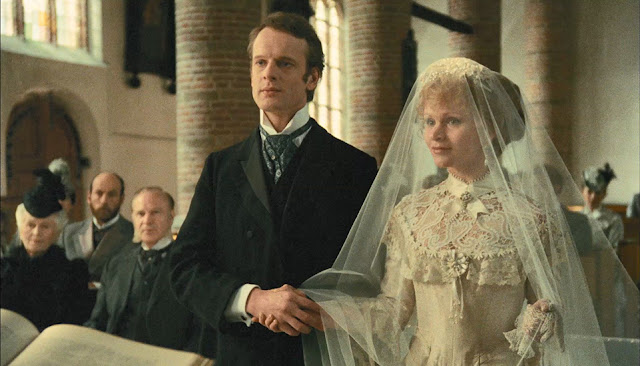
17. The Cool Lakes of Death (1982, Blu Ray- Region Free, Cult Epics)   


This Dutch film, much talked about but seldom seen, is primarily renowned as a star-making role for the actress Reneé Soutendijk, in a film that fascinatingly combines the conventions and styles of a Swedish psychodrama, a literary adaptation in the British Masterpiece Theater mode and in-your-face, overtly sexualized melodramatics of Central European cinema into an indelible mix.  It is by no means a perfect film, nor is it likely to appeal to the viewers of all persuasion, but there is no questioning the impeccable presentation that Cult Epics wrangled out of the vaults, beginning with a new 4K restoration from the original negative.  And Soutendijk is a feast to the eyes of the viewers all by herself, with her daring yet sensitive portrayal of a woman whose path to happiness and self-realization is constantly beset by both the specific obtuseness and hypocrisies of 19th century Christian “civilization” as well as the sheer cruelty of the fate.   
  

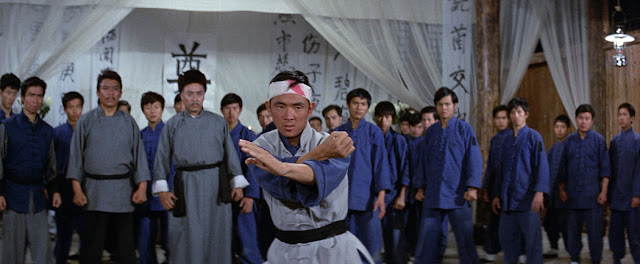
16. The One-Armed Boxer (1971, Blu Ray- Region B, Eureka!)


This is another film that I had a chance to watch as a kid (with my paternal uncle, if I remember correctly) in a jam-packed South Korean theater with an eager and enthusiastic audience.  I vividly remember that being impressed by the title track, not realizing that it was wholesale pilfered (illegally, of course) from Isaac Hayes’ Shaft.  Many years later, when I had a chance to watch the film in a Japanese dubbed version (I in fact own the Japan-released Blu Ray) I was surprised to hear a perfectly decent, uber-funky original score (composed by Joseph Koo, who also did other Hong Kong films including Bruce Lee’s Way of the Dragon).  Well, both versions are included in this great presentation from Eureka!  The film is a fascinating blend of exaggerated ethnic stereotypes functioning as villainous but superhuman traits, combined with a kabuki-like theatricality of “chop socky” action.  It is almost as stylized as a Japanese sentai (think Power Ranger) series, which explains its popularity among Japanese, despite the almost grotesque presentation of the head Japanese villain as literally an ogre with two-inch incisors protruding from his mouth.


15.  The Damned (1969, Blu Ray- Region A, Criterion Collection)


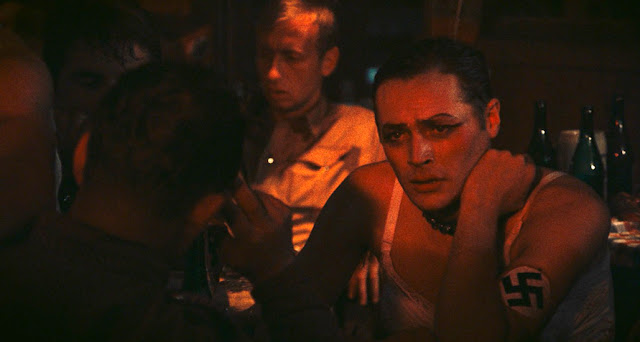
I have always had mixed feelings about the “fascism as erotic/sexual corruption” subgenre of European cinema, starting with The Conformist (which I believe is a masterpiece despite my misgivings about its sexual politics) and down to Night Porter (which I believe is not even good as a pornography.  Give me Radley Metzger over this kind of self-important, self-consciously “disturbing” Liliana Cavanini claptrap any time of the year).  Sitting somewhere in the middle in my estimation is Luchino Visconti’s The Damned, with the kind of once-in-a-lifetime international cast colliding into an icy melodrama of familial conspiracy, corruption, sexual predation and betrayal, interspersed with the disturbingly authentic-looking sequences of young, naked Nazi soldiers violently frolicking, cross-dressing and then belting out patriotic and military songs in German.  Criterion Collection’s excellent presentation properly contextualize this problematic work within Visconti’s oeuvre as an aristocratic and gay Italian filmmaker. 


14. Irezumi (1966, Blu Ray- Region A, Arrow Video)


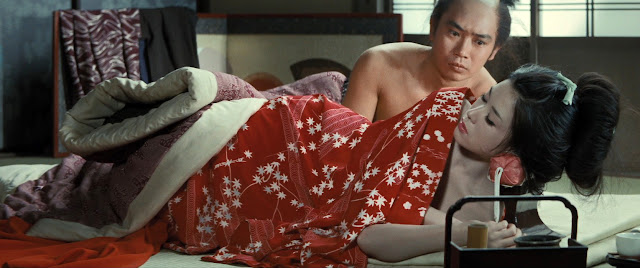
I honestly do not believe there has been any cinematic adaptation of Tanizaki Jun’ichiro that has avoided some form of controversy, or fans of the Japanese author attacking it for just not “getting” what makes his novels so exquisitely and sometimes disturbingly attractive.  Premier among the cinematic adaptors of Tanizaki is incontrovertibly Masumura Yasuzo, whose Manji (1964) can be used as a great example of how to tackle a supposedly “unfilmable” work of literature.  Irezumi, another adaptation of a Tanizaki story, shows a strong color of the screenwriter Shindo Kaneto, and perhaps pushes the story a bit away from its almost psychedelic masochism toward not-quite-feminist, socially angry pulp noir. Yet a mere vista of Wakao Ayako’s amazing performance as a uber-femme fatale with the demon-faced spider tatoo squirming in her backside, rendered in the hypnotically eroticized, deeply shaded color cinematography by the master Miyagawa Kazuo, is sufficient to make any nay-sayer look like a complete idiot.  Arrow’s expert presentation based on Kadokawa’s new 4K restored transfer is accompanied by reliable scholarly exegeses, topped by an audio commentary by David Desser. 


13. The Forbidden Door (2009, Blu Ray- Region Free, Severin Films)


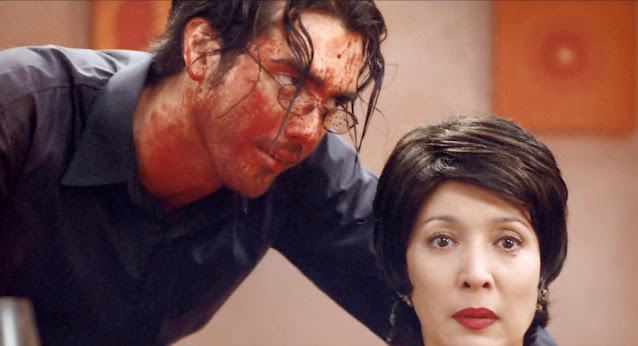
Indonesian genre films have steadily been gaining international reputation since at least mid-2000s, and I am partial to them (as opposed to, say, the more aesthetically consistent Thai horror films) for various reasons.  Joko Anwar’s Forbidden Door is one of those films with cult reputations that nonetheless seem to fall through the cracks.  I have been on a lookout for a decent physical media presentation of this ambitious third directorial effort from Anwar, but it literally dropped on my lap from Severin Films in 2021.  Now that Severin has not only this film but also the 1982 original Satan’s Slaves (which Anwar remade into another crackling horror in 2017) under their belt, it is sincerely hoped that they will continue the mine the rich treasury of Southeast Asian-Indonesian horror in the future. 


12.  The Invisible Man Appears/ The Invisible Man vs. Human Fly (1949-1957, Blu Ray- Region A, Arrow Video)


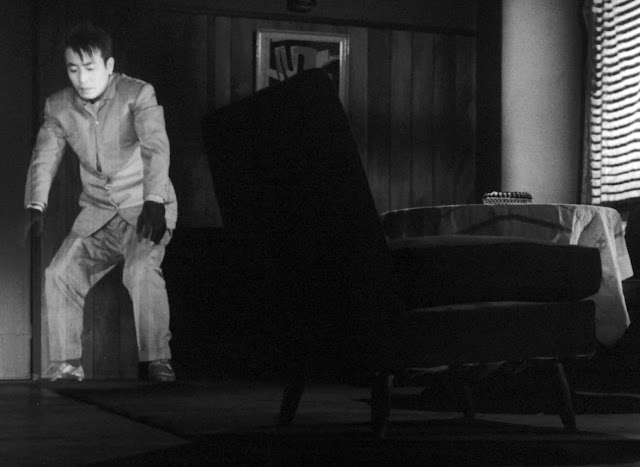
Arrow’s expertise in curation of the more obscure titles from the vaults of classic Japanese cinema is currently unmatched by any other label, including the studios in Japan.  These two takes on Invisible Man tropes are fascinating in their reflection of the immediate postwar Japanese culture and mores, but also in their reworking of the prewar legacies of Japanese cinema, such as the striking presence of the androgynous musical star Mizunoe Takiko.  The competent special effects for The Invisible Man Appears are the handiworks of Tsuburaya Eiji, who in 1948 had been fired from Toho Studios by the Allied Powers GHQ for his technical contribution to the wartime propaganda films, and for whom this unassuming programmer was the first special effects supervisor credit after that harrowing experience. 


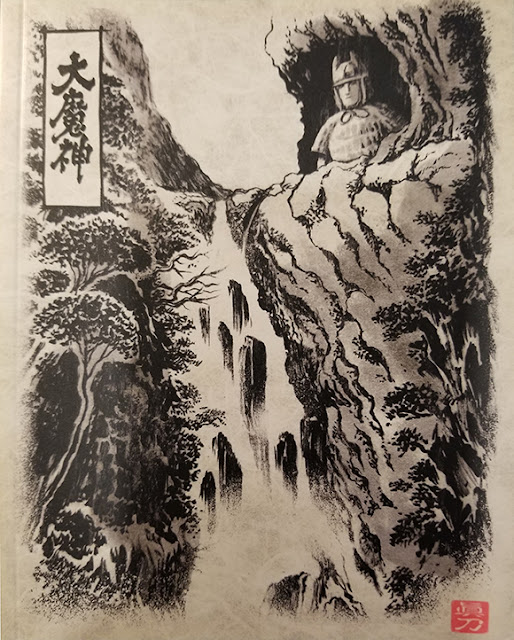
11. Daimajin Collection (1966, Blu Ray- Region A, Arrow Video)


The three Daimajin films, minor classics of the Japanese special effects cinema and all released within the space of one year, like Gamera the Flying Turtle films, have previously been available as blu rays via Mill Creek productions, but Arrow’s gorgeous designed box set simply ups the ante by showering the film with meticulous attention befitting a high-end catalogue for a major museum exhibition of a renowned woodblock artist.  As is the case with Gamera collections, the astonishing care and respect Arrow pours on these titles by themselves warrant a double dipping for any serious collector of the Asian genre cinema. 


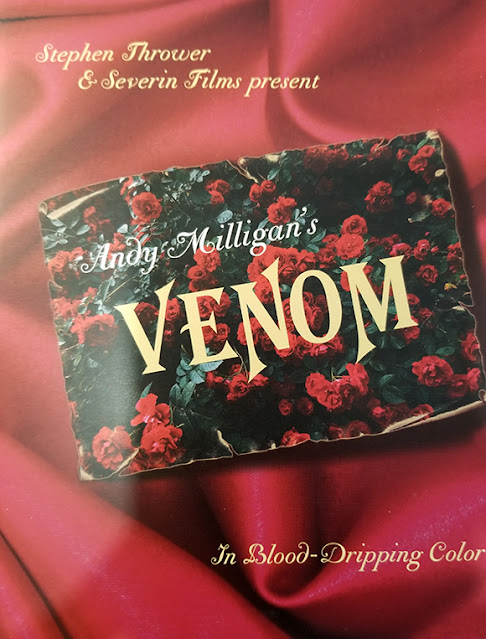
9. The Dungeon of Andy Milligan Collection (1968-1998, Blu Ray- Region Free, Severin Films) 


One of the massive, jaw-dropping boxset collections to have come out in 2021, the Andy Milligan collection is only ranked at the tail end of the Ten Best because, let’s face it, some of Milligan’s films do not necessarily invite multiple revisits, even for seasoned connoisseurs of the cult and exploitative cinema.  Having said that, would I shell out the dough for the Andy Milligan boxset any day over a Jess Franco or Lars von Trier boxset?  You bet your steaming mug of matcha latte!  The lot of the Staten Island maverick’s oeuvre are not merely grungy or scuzzy, but imbued with a strangely authentic nastiness that is in many ways a hallmark of a genuine auteur, someone who is working out a twisted personal vision.  The dedication and commitment that Severin put into this boxset is, needless to say, exemplary and sets the bar as high as any collector could ever hope.


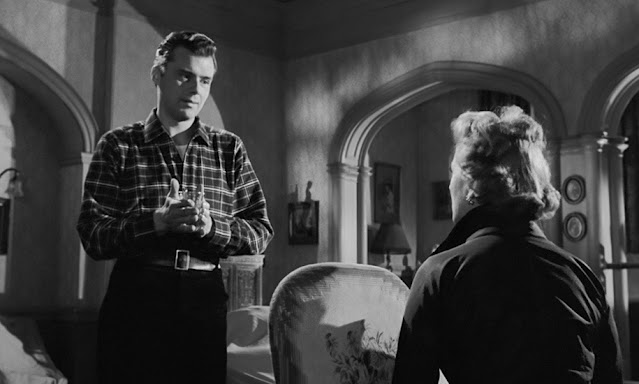
8. Cast a Dark Shadow/Wanted for Murder (1946-1955, Blu Ray- Region A, Cohen Media)


I purchased this double feature release from Cohen Media based on only the titles and the designation “British film noir.” Turns out that this was the “why didn’t I know about this movie until now?” title of 2021.  Both films draw upon the idioms of classic mysteries but also reflect the dark undercurrents of postwar film noir in their styles, characterizations and themes.  Cast a Dark Shadow in particular is distinguished by a remarkable performance from a young Dirk Bogarde, strikingly sympathetic and complex, even when he is plotting a cold-blooded murder of his much older wife.


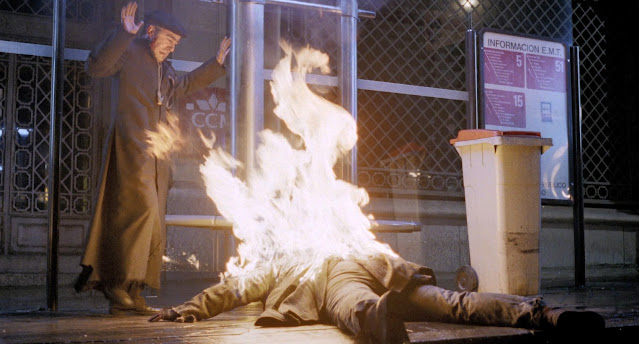
7-6. The Day of the Beast/Perdita Durango (1995-1997, 4K UHD Blu Ray, Severin Films)


This year’s 4K UHD selections went to the surprise releases of Alexis de la Iglesia’s audacious and more than a little crazy ‘90s prime cut examples of extreme cinema, The Day of the Beast and Perdita Durango, the latter film memorable for, among other things, having introduced to me Javier Bardem and pre-Sopranos James Gandolfini (that was already fifteen years ago!  Egad…).  Seen in this sparkling ultra-high-definition presentations, these two early works of de la Iglesia come across as unexpectedly nostalgic and robustly cinematic, with strong ties to the macho-excessive, in-your-face works of American masters from earlier generations, such as the films of Robert Aldrich, whose magnificent “dirty” Western Vera Cruz is reverentially referenced in Perdita. 


5.  Nightmare Alley (1947, Blu Ray- Region A, Criterion Collection)


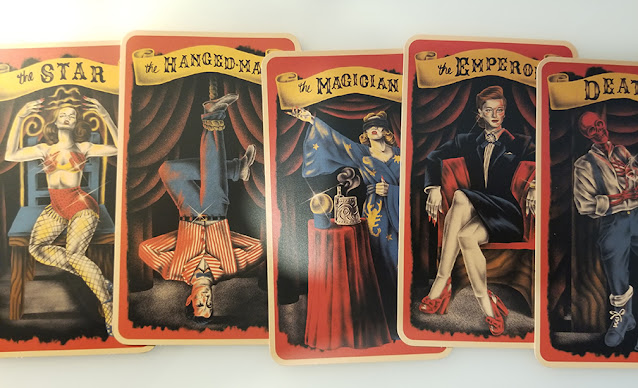
One can debate whether this unsung masterpiece from the immediate postwar period is actually a film noir, but no matter.  It features an authentically great performance by Tyrone Power, as a beautiful-looking carny barker who plots to make it big as a spiritualist with the help of titanium-hearted psychiatrist femme fatale Lilith Ritter, played with great aplomb by Helen Walker.  Criterion’s very welcome special edition does this unexpectedly thoughtful and deeply mysterious “thriller of the soul” justice. The graphic design is especially pleasing, including a set of major arcana Tarot deck designed by Ricardo Diseño, representing the Tarot signs represented by the film’s characters (Lilith is designated as The Emperor, a truly apt choice!).


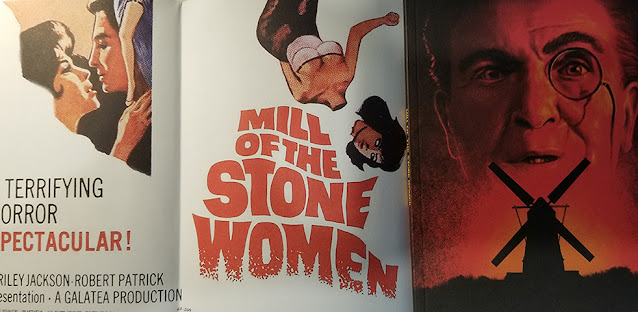
4. Mill of the Stone Women (1960, Blu Ray- Region A, Arrow Video)


After nearly fifty years, I am still rediscovering the European-Filipino-Japanese-Mexican-Latin American horror films that I had watched through the crack opened up between my comforter and pillow on the American Forces Korean Network channel in late ‘60s and early ‘70s, where such titles as Brides of Blood (1968) would air uncensored (yep, all nudity and gore intact) and in black and white. Mill of the Stone Women is one of the premier titles that I remember from these days, because it is the one that for one reason or another my Dad translated key dialogues for my benefit, not that you had any difficulty following the thread of horrific events taking place in the film, by simply taking in visual information onscreen. 

Mondo Macabro had previously brought this film out to DVD, but Arrow Video’s lavish Blu Ray special edition justifies the double dipping any way you cut it.  Arrow performed a 2K restoration on the original negative, but also presents four different versions in Italian, French and English languages with varying extents of exploitation contents and rolls out a series of unbeatable supplementary materials spearheaded by a Tim Lucas commentary and an essay on female wax figures/statues in Gothic horror films by Kat Ellinger. Topping it all off are sumptuous art design with illustrations by Adam Rabalais.  In a nutshell, the boxset is a work of art in and of itself. 


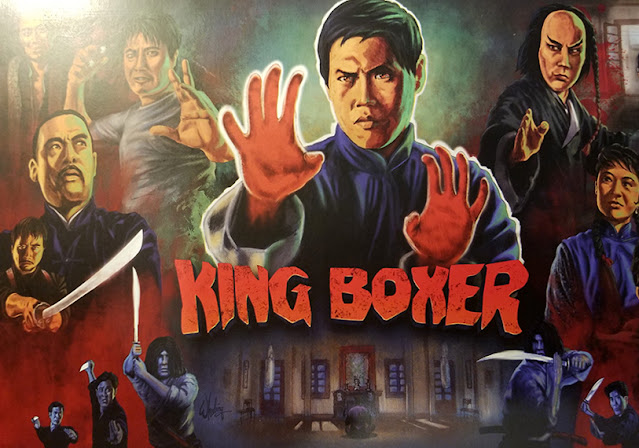
3. Shawscope Collection vol. 1 (1972-1979, Blu Ray- Region A, Arrow Video)


I do not believe any self-respecting fan of Sinophone martial arts films (should I keep using the designation “kung fu” films?  Most characters of these films do use the term kung fu or gongfu, so it is perhaps not so far off the mark) could possibly pass up this twelve-film collection that comes with an appropriately widescreen-formatted booklet and original illustrations from a host of artists that reproduce the look and feel of the ‘70s Asian theater marquees.  A special mention should be made about the fact that some of these Shaw Brothers extravaganzas— especially King Boxer, The Five Venoms, and The Boxer from Shantung, which I have been able to check out in some detail— have been restored by Arrow from the original negatives and sport the looks significantly different from their previous HD editions, much more film-like and missing that excessively smooth countenance familiar from some Celestial Pictures transfers of the Hong Kong classic films.  

And of course, the fans need not be reminded that this collection, massive and overwhelming as it is, is only volume one! 


2.  Deep Cover (1992, Blu Ray- Region A, Criterion Collection)


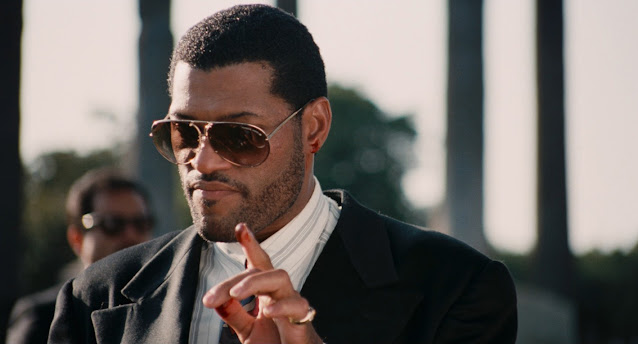
On top of my list for a long time for the most desirable American titles from late ‘80s-early ‘90s that should have received special edition treatments but been neglected for all these years (other titles include M Butterfly and The Mosquito Coast), Deep Cover is in my view the most interesting and politically prescient urban Afro-American films that came out in this era, more so than anything directed by Spike Lee, the Hughes Brothers or Mario Van Peebles.  Twenty years of time has only deepened our appreciation of the film’s trenchant and direct critique of the Reaganite-Republican hypocrisies of the so-called War on Drugs, its enormously entertaining filmmaking finesse, and great acting by the participants all around, including only once-in-a-lifetime pairing of Lawrence Fishburne, also in John Singleton’s Boyz n the Hood, and Jeff Goldblum, just coming off playing the hideous psychopathic killer in Mr. Frost.  This is not exactly Sidney Poitier bantering with Tony Curtis, folks, uh-uh, nope.


1.  The Eurocrypt of Christopher Lee Collection (1962-1972, Blu Ray- Region A/Region Free, Severin Films)


This year’s number one title goes to another unreal boxset crafted with love and care by the good folks of Severin.  This boxset includes some films that are, let’s be honest, complete duds, the kind of films that would not necessarily merit inclusion in a sumptuous collection such as this had they not starred Christopher Lee.  After all these years, I am realizing that, among all deceased great film actors regardless of their nationality, training or eras they were active in, I miss Peter Cushing and Christopher Lee most.  I dearly wish they are still around, appearing in all manners of movies.  How much I would have loved to see Mr. Cushing appearing as one of the villains or sympathetic scientists in a South Korean SF or horror film!  Yes, I do dearly miss Sir Laurence Oliver, Kirk Douglas, Heo Jang-gang (the premier villain actor in classic Korean cinema), Mifune Toshiro, Jean-Paul Belmondo and Bruce Lee (Notice that I am confining myself to male actors here.  I am hundred percent sure I will get a chance to ramble on like this about deceased great female actors soon), but none of them occupy quite the position Mr. Cushing and Mr. Lee have in my movie fan’s pantheon of great stars.  

We should consider ourselves fortunate that these gentlemen have left such a bountiful legacy, many of which after all these years are ripe for rediscovery.  So perhaps my nostalgia pushed this boxset to the top position in the list.  So be it.  I really cannot think of a more appropriate reason for it belonging here. 

So it is finally done this year as well!  Better late than never, what can I say?   My profound thanks to all the labels who keep believing in the physical media as the premier venue for watching classic cinema, led by Severin Films and Arrow Video, but also including Criterion Collection, Kino Lorber, Shout! Factory, Cohen Media, Vinegar Syndrome, Cult Epics, Studio Canal, Warner Archive Collection, Powerhouse Indicator and many others.  Additional showers of gratitude to ever-reliable online reviewers, again led by DVD Savant and Mondo Digital, and including DVD Beaver, Blu-ray.com and other sites.  Let us all hope that 2022 will see resumption of the semblance of normalcy for movie theaters, but I have zero concern as far as the continued availability of great classical films on the physical media.   

One final note: Severin’s stupendous, jaw-dropping boxset, All the Haunts be Ours: A Compendium of Folk Horror, was obtained in early weeks of January and I briefly considered including it in the 2021 list, but I have decided not to.  I was not really concerned about technicalities such as whether the boxset was really copyrighted to 2021 or 2022, but the fact that it included so many titles that I was not even aware of and doing it justice would definitely take more time than merely one month or so. It will be amazing if any other boxset/special edition beats it out for the top spot in the 2022 list! 

Wednesday, April 28, 2021

Il Cento notti di orrore PART 5- Recent Korean Horror Films: THE WITCH PART 1: SUBVERSION (2018), PENINSULA (2020) & BEAUTY WATER (2020)

No one is asking me to continue Il Cento notti di orroreOne Hundred Nights of Horror and I am just not giving up on it. I will gladly use the COVID-19 pandemic as an excuse for not putting together the fifth installment within the year of 2020, although we dang well know that the delay, postponement or foot-dragging, anyway you want to call it, had absolutely nothing to do with the virus, as, if anything, indie and low-budget horror films have saturated the streaming and VOD services with vengeance, and I have happily been glutting myself with them. If I had to find the real culprit for the absence of another installment the stresses of online teaching would be closer to the mark.   Now that the Orange Maggot is ensconced in Florida instead of being the real-life Twitter-Dictator and the office of American presidency has been taken over by a real human being, who has presumably learned the lessons about how to cope with Republican anti-democratic obstructionism, things are finally looking up.   Everyone around me at UC Davis as well as Berkeley has received at least one dose of vaccine as of April 20, 2021, and I believe, barring another outbreak of something as virulent as COVID-19 in the coming months (I am less worried about the possibility of various mutant variants of the virus neutralizing the effects of the vaccine than some folks, and my prognosis is based on scientific findings as much as I can lay my hands on), I shall finally be able to go back to watching a motion picture in a theater (no doubt it would be a very different experience, post-COVID, but I will worry about it then). For this session, to make up for lack of new reviews for the official Koreanfilm.org page for the past two months, I have decided to use this slot for the short takes on three new Korean horror films.  

So picking up where I have left the list last time at No. 16, and now forging ahead.  The rating system is based on the Japanese critic Futaba Juzaburo’s invention: a white star ( ) counting for twenty points, and a black star () for five points, with somewhere between 55 and 60 points pinned down as the “average” score, given that few movies actually score higher than 90 or lower than 30.      

17. The Witch Part 1: The Subversion 마녀 (South Korea, 2018). A Geumwol Pictures-Peppermint & Co. Production, Distributed by Warner Brothers Korea.  Aspect Ratio: 2.35:1, 2 hour 5 minutes. Director & screenplay: Park Hoon-jung. Cinematography: Kim Young-ho, Lee Tae-o.  Music: Mowg. Production Design: Cho Hwa-sung. Editor: Kim Bang-joo. Costume Design: Jo Sang-gyoung.  Special Effects Makeup: Hwang Ho-gyun, Kwak Tae-yong.  Watched through subscription: June 2020, Netflix.  The entrepreneurial-screenwriter-turned-commercially-successful-director Park Hoon-jung (The Showdown, New World and the famed scribe for Kim Jee-woon’s I Saw the Devil) came up with V. I. P. in 2017, a critical and commercial flop. Perhaps because he was accused of rampant exploitation of female characters in that film, Park insisted on turning the central protagonist and head villain of his next film into females. Although the resulting The Witch Part 1: The Subversion has gained some notable support among the fans of gory action thriller subgenre, i. e. the so-called “Extreme Asian” cinema, and gives an interesting role to a talented young actress, Kim Da-mi (Marionette), the film is ultimately lugubrious, self-satisfied and pointlessly vicious. Kim plays Ja-yoon, a bright-eyed teenager adopted by a retiree couple (Choi Jeong-woo & Oh Mi-hee), but the viewers already know from the messy and unpleasant prologue that she is a product of some awful scientific experiment on children conducted by the South Korean government in a secret project spearheaded by Dr. Baek (Jo Min-soo, Pieta).  The foul-tempered and -mouthed scientist unleashes her other creations, including a constantly masticating, scarred thug Mr. Choi (Park Hee-soon) and an English-speaking twerp (Choi Woo-shik), to locate and retrieve Ja-yoon, in a plot rather similar to Brian De Palma’s psychokinetic thriller The Fury (1978).


The movie is certainly slickly put together, with some competent lensing by Kim Young-ho (The Pirates) and Lee Tae-o and suitably grungy but substantial production design supervised by Cho Hwa-sung (Illang: The Wolf Brigade) as well as Park’s sharp eye for composition and legible action sequences. However, I found the whole story and especially characterizations mostly irritating and enervating, sometimes borderline repellent.  You might say, aren’t the movie villains supposed to be like that?  Sure, but great villain characters have compelling charisma, convictions about the righteousness of their agenda, or at the very least entertaining or intimidating personality traits. All of the villains in The Witch are either low-brain-capacity, two-bit thugs (Mr. Choi) or hateful stereotypes of what some Korean men consider to be “deviant” males (The “handsome guy” played by Choi Woo-shik, for instance. At least I am grateful that he does not insert “fuck” into every other English sentence he tosses out). Topping them all is the female mad scientist Dr. Baek, who speaks and acts like a Korean middle-ager particularly well versed in assholery, only with her physical gender switched to “female.”  I did say the film is slickly made, but this does not mean that The Witch is a model of efficient and economical storytelling.  For one, it is interminably long, taking more than one hour to get the villains to properly reveal their hands to the viewers. There is altogether too much blood and sticky gore, some of them distastefully involving children.  I am not even going to go into the “science” of this alleged SF thriller, strictly voodoo stuff.  Unlike two decades ago, South Korean literary scene is today overflowing with sophisticated works of SF: a basic consultation with any of their authors would have yielded a far superior, more logically sensible basis for explaining Ja-yoon and her cohort’s superpowers. 


One possibly innovative element about the film is Ja-yoon’s characterization, or the way the film sets the viewers up to root for her only to pull a Lucy-with-a-football on them.  The “twist” is quite as nasty as the rest of the film (perhaps this was what the sub-title “subversion” was referring to?), but I do acknowledge that it does distinguish The Witch from, say, average American films of its ilk. The problem is that Kim Da-mi obviously is given no direction how to handle this about-face about her character and comes off as simply bug-eyed psychotic, losing much of the viewer sympathy accumulated for her throughout the film.  Nihilistic, show-offy, macho-bullshitty but competently made, The Witch is an old Tartan DVD-marketed Extreme Asia film to a tee. Those craving for the allegedly politically incorrect pleasures of seeing beautiful Asian kids doing ugly, cruel things to one another while spitting the kind of dialogues ranging between comic book one-liners and gangsta pig grunts might have a reasonably good time with The Witch.   ☆☆★★★ 

18. Beauty Water 기기괴괴 성형수 (South Korea, 2020). A Studio Animal/SS Animent/Triple Pictures Co-Production. Aspect Ratio, 1.85:1, 1 hour 25 minutes. Director: Cho Kyung-hun.  Screenplay: Lee Han-bin. Animation Director: Lee Sang-hoon. Cinematography: Moon Seong-cheol. Music: Hong Dae-sung. Based on a webtoon series Gigigwegwe by Oh Sung-dae.  Production Designer: Cho Hye-seung. Voice Cast: Moon Nam Sook (Ye-ji), Jang Min-hyuk (Ji-hoon), Choi Seung-hoon (Manager), Jo Hyeon-jeong (The Beautician), Kim Bo-yeong (Miri).  Purchased through Naver Series-On, October 2020. Ye-ji is an unhappy make-up artist working for a talent agency, perennially condescended to by the latter’s pea-brained, bitchy star Miri. Once an aspiring ballerina, Ye-ji is today heavyset and depressed, snapping at her indulgent parents and surfing the internet to unload her gripes as a vicious troll.  One day, she runs into a creepy commercial about a certain magic cosmetic liquid capable of transforming a person into an unimaginable beauty, by literally dissolving her unwanted flesh. Initially skeptical, she is astounded to learn that, not only the liquid exists and can be purchased by a large bundle of cash, but it also actually works.  Of course, she must not forget to strictly follow the instructions.


Yet another South Korean feature based on a webtoon series and a selection at the 2020 Bucheon Fantastic Film Festival, Beauty Water is a grungy, computer-animated entry in the body horror subgenre, effective in its own way but not really innovative or envelope-pushing. The overall approach is grounded in TV-drama-style narrative conventions. The animated figures are on the “realistic” side of the spectrum, except for a few instances wherein anime-like exaggeration and stylization are deliberately invoked (as in the first incarnation of Ye-ji’s “new face,” with its completely out-of-proportion huge eyes and non-existent nose). 

As is usually the case with low-budget horror films with high-concept premises (Larry Cohen’s horror opuses provide a good template), social criticism is more or less built into the film, resulting in some amusingly on-target satirical zingers. On the other hand, Ye-ji’s characterization makes it difficult for the viewers to fully invest in her: she thoughtlessly exploits her poor parents for both money and supplementary flesh (although how this “transfer of flesh” from one body to another is accomplished is not clearly explained) and typically regards other women as competitors for the affection of her handsome male paramour Ji-hoon. Ye-ji in the end receives a harsh punishment from the filmmakers for her presumably “shallow” and “selfish” desires, but it remains unclear whether the viewers should feel sad, chastened, or sadistically enjoy her awful fate. I also have an issue with the transgendered-as-a-monster stereotype that informs one of the film’s climactic “twists,” although, to be fair, this stereotype and its variants are alive and well in North American genre films too. Apparently the original webtoon’s Ye-ji was a far more pro-active and independent, although equally single-minded, woman who self-sculpts her face and body into that of an ideal beauty, instead of relying on a beautician for the latter’s surgical skills and her parents for financing her transformation: perhaps that part of her character could have been retained in the film.  Not a bad slice of gruesome body horror, Beauty Water still does not quite fully exploit the transgressive or satirical potentials of its premise. ☆☆☆   


19.  Peninsula 반도 (South Korea, 2020).  A Next Entertainment World/RedPeter Films/New Movie Co-Production.  Aspect Ration 2.39:1. 1 hour 56 minutes.  Director: Yeon Sang-ho. Screenplay: Yeon Sang-ho, Ryoo Yong-jae. Cinematography: Lee Hyung-deok, Jung Kee-won.  Music: Mowg. Editor: Yang Jin-mo. Special Effects: Jung Do Ahn, Yoon Hyung Tae. CAST: Gang Dong-won (Han Jeong-seok), Lee Jung-hyun (Min-jung), Lee Re (Joon), Kwon Hae-hyo (Mr. Kim), Jang So-yeon (Jeong-seok’s sister), Kim Min-jae (Private Hwang), Gu Gyo-hwan (Lieutenant Seo), Kim Han-sol (Young Zombie), Pierce Conran (American TV Commentator). Purchased through Naver Series-On, January 2021. As you can infer from the US-based streaming service’s import title Train to Busan Presents Peninsula, this is Yeon Sang-ho’s official sequel to his breakthrough zombie attack epic Train to Busan (2016).  There is no overlap of characters, except that both films take place in the fictional world in which a zombie epidemic had decimated the Korean peninsula. The screenplay wastes little time in setting up a McGuffin, a truck full of lucrative merchandise lost near Omokgyo, a bridge that crosses the Han River near its terminating point.  Han, a former naval special forces agent traumatized by his failure to protect his sister and nephew from the infection, agrees to the retrieval mission.  Once having arrived in the ruined Korean peninsula, however, he runs afoul of not only a horde of fast-running zombies but also a squad of renegade soldiers lording over civilian survivors, putting up gladiator death matches with the captured for their amusement.  He is also befriended by a seemingly crackpot Mr. Kim (the indie veteran Kwon previously voice-acted for Yeon’s The Fake) and his ersatz family, Min-jung (Lee Jung-hyun, A Petal) and her daughters Joon (Lee Re, all grown up from the days of How to Steal a Dog) and Yoo-jin (Lee Ye-won), who insists that a UN rescue mission is about to arrive and pick them up.


One of the most anticipated Korean films of 2020, Peninsula, while playing in the midst of the pandemic, did a fine business, racking up more than 3 million tickets and doing very well with the international pre-sales, and received mild praise-to-enthusiastic support from the critical community. Like many South Korean genre films made in recent years, Peninsula is highly competently put together. The strength and agility of the infected population is, again like in Train to Busan, terrifically illustrated, although their Energizer-bunny stamina after four years of lockdown and starvation is so unlikely it becomes funny rather than scary (The film notably downplays blood and gore effects, too, receiving the US equivalent of PG-13 rating for its domestic release).  The dynamic set pieces involving harrowing escapes from these super-fast zombies, even more video-game-like here, are surely the best parts of this sequel.  Yeon dutifully presses a few satirical buttons— Koreans are now referred to as “peninsula folks” as was historically so during the colonial period, for instance— but it seems clear that his heart was just not in it.  Neither is he particularly interested in realistically exploring the uncomfortable new status of Koreans as refuges of a global pandemic (for your information, North Korea has also been presumably overrun by the zombie virus in this world, although the country is never directly mentioned). Bong Joon-ho’s The Host in the end did a much wittier job of addressing the American and South Korean hypocrisies regarding the prospect of a global pandemic.  Yeon also for no discernible reason indulges in melodramatic touches (although as anchored in Gang Dong-won and Lee Jung-hyun’s competent performances, they are not as unpalatable as they could have been).  Finally, his human villains are typical macho-stupid Korean movie thugs: instead of providing dramatic tensions, you irritatingly wait for them to fast become zombie chows.


Peninsula is not a badly made film at all and is probably superior to the majority of Hollywood movies with a similar setup in terms of execution of its admittedly cliché-ridden premise. Yet, I found it ultimately disappointing, not only failing to measure up to the genuinely suspenseful direction and sympathetic characterizations of its predecessor, but also curiously forgettable and lackadaisical.  I hope I am not being unduly critical of this film due to the inevitable high expectation I had for the newest film from Yeon, a guy responsible for not just TTB but also Seoul Station. It is difficult to avoid the impression that he is slumming here to meet the unrealistically high commercial expectations to the best of his ability, rather than grappling with his personal demons and unleashing them unto the viewers. Those who have not experienced Yeon’s other jaw-droppers might enjoy Peninsula perfectly well as a smart, above-average piece of entertainment. ☆☆☆